Category Archives: History and philosophy of science

Robert Boyle summer school

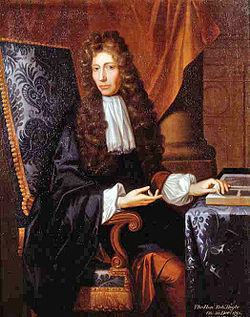
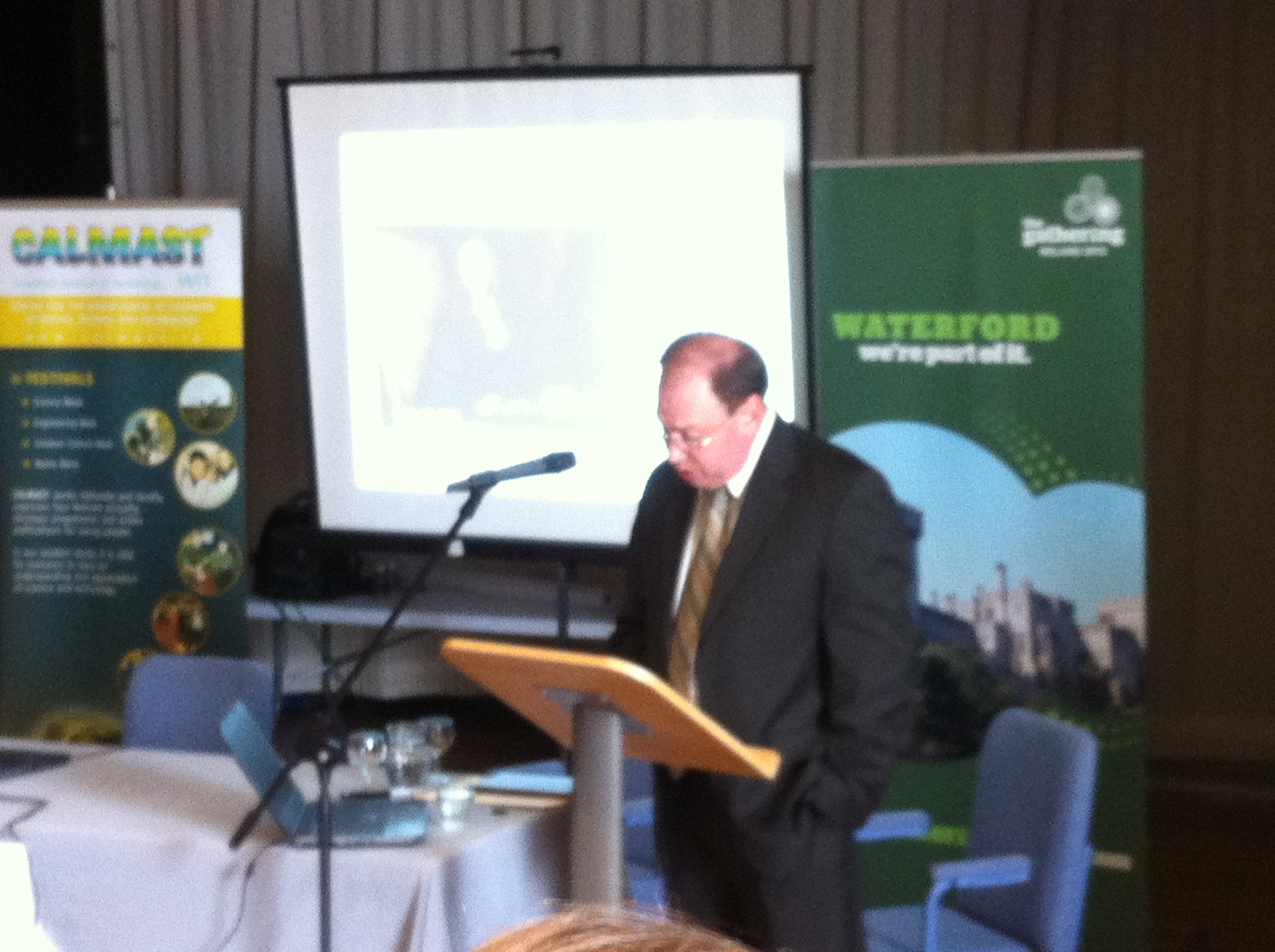
I spent last weekend at a most enjoyable summer school in honour of Robert Boyle, the Waterford-born Anglo Irish aristocrat who became a major figure in the English scientific revolution. Boyle was extremely well-known in his day for his scientific discoveries, his role in the Royal Society and his discussions on the usefulness of the new scientific method (if he is less well-known today, it may be because his contributions were later eclipsed by the groundbreaking advances of his contemporary, the genius Isaac Newton).

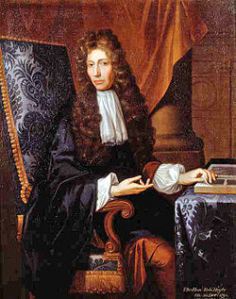
250px-Robert_Boyle_0001

The Irish-born scientist and aristocrat Robert Boyle

IMG_0636

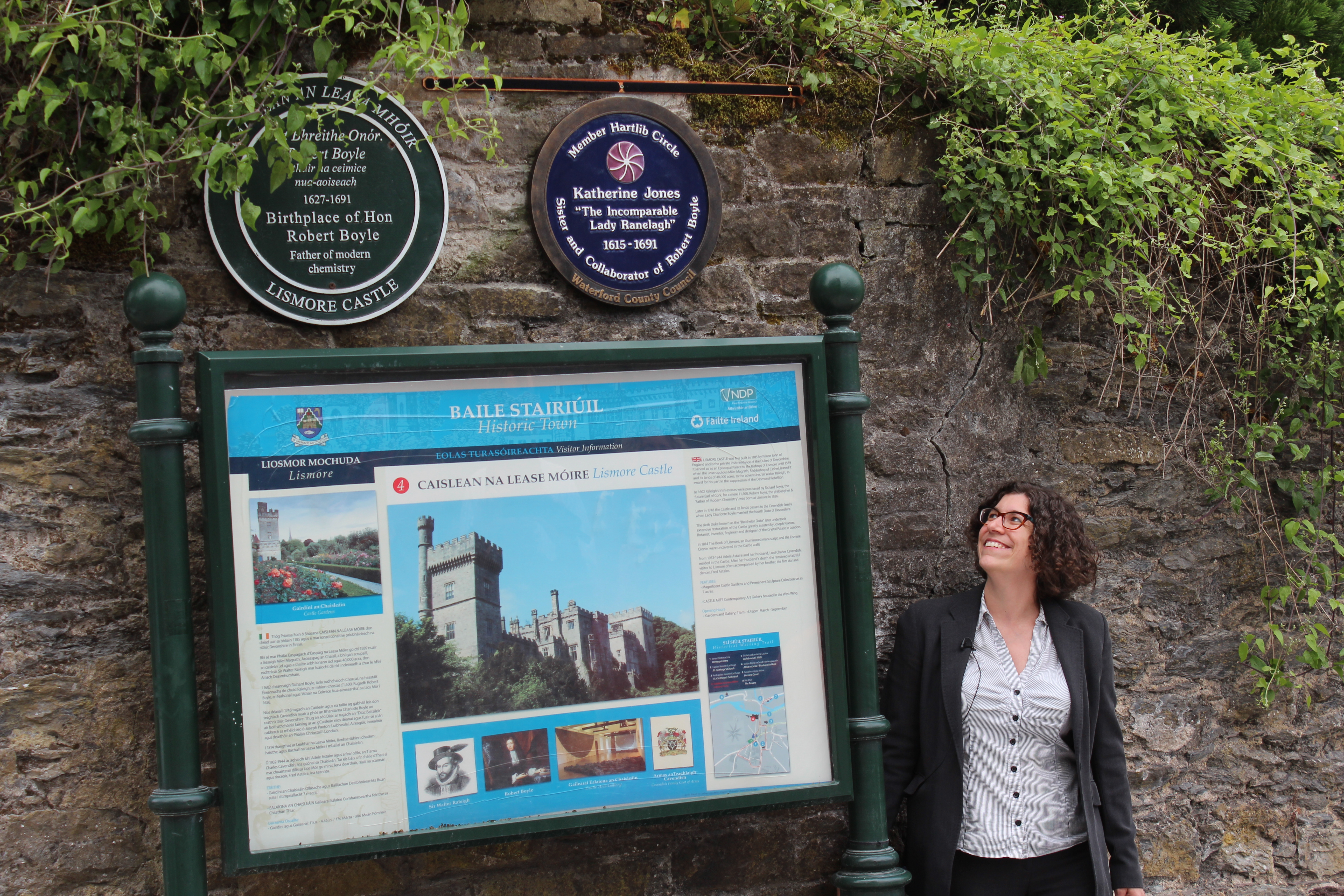
Lismore Castle, the birthplace of Robert Boyle

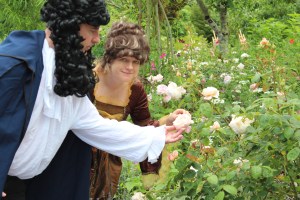
The summer school took place from Thursday 4th to Sunday 7th of July in the Heritage Centre in Lismore, the beautiful town that is the home of Lismore Castle where Boyle was born.  The talks covered a wide range of topics, from the history and philosophy of the scientific revolution to Boyle’s own life and were of huge interest to anyone with an interest in history, science or indeed the history of science.  It was the sort of conference I like best – a small number of inter-disciplinary talks aimed at curious academics and the public alike, with lots of time for questions and long breaks for discussion. Other highlights were an open-air barbecue in Lismore Castle on Friday evening, a re-enactment in costume of some famous Boyle experiments and a tour around the famous Lismore Castle Gardens.

IMG_0626

Song and dance in the grounds of Lismore Castle

The festival proper started with a lecture on Thursday evening by Jim Malone, the Robert Boyle professor of medical physics at Trinity College Dublin:  ‘Robert Boyle: Getting to Know the Man from Lismore’. This was a general overview of Ireland’s most famous scientist, from Boyle’s early years in Ireland to his travels in Europe in 1639-45, from the rise of the Royal Society in England to Boyle’s prolific work at Oxford in the period 1655-1668. It was a very appropriate introduction to Boyle’s great contributions to science, medicine, philosophy and theology and there were also many biographical details I hadn’t heard before, not least the astonishing number of awards and honours he turned down – clearly not a scientist motivated by fame or fortune. You can find more on Jim and his lecture on the conference website here.

IMG_0623

On Friday morning, Dr Anna-Marie Roos of the University of Lincoln laid out the historical context of Boyle’s work in more detail in her lecture ‘Robert Boyle and Early Modern English Science’. Starting with the work of Sir Francis Bacon, she described the emergence of a new questioning of the wisdom of the ancient Greeks, a new philosophy propagated by the invisible college. She then went on to describe Boyle’s experimentation in the context of complementary investigations by colleagues such as Hooke, Wren and Halley. This talk established a detailed social context for Boyle’s investigations very carefully without in any way detracting from the great work he did. You can find more on Anna-Marie and her lecture on the conference website here.

IMG_0625

In the afternoon, Dr Bill Eaton of Georgia Southern University gave the talk ”Boyle in Ireland; Medicine and the Mechanical Philosophy’ where he made a very interesting point on Boyle’s philosophy of science. It turns out that although Boyle spent very little time in Ireland, he did some work on dissection of animal and human cadavers with William Petty in the period 1652 to 1654 in Ireland, experiments that played a very important part in the development of his philosophy of science. Thus, while we associate Boyle’s  scientific work with his later years at Oxford, it is likely that his earlier studies in anatomy in Ireland probably played an important role in in his development as a scientist, particularly in his belief in experimentation to judge the rightness or wrongness of a hypothesis. More on Bill and his lecture here.

IMG_0626

Song and dance at the castle barbecue

I had a sore head after the open-air barbecue at Lismore Castle on Saturday morning, but not so sore that I didn’t enjoy the superb lecture ‘For the Glory of God and For the Relief of Man’s Estate’ by Dr Allan Chapman of the University of Oxford. In many ways, this was the perfect sequel to Anna Marie’s earlier talk on historical context (see above), I never tire of Allan’s unique coupling of a huge breadth of historical knowledge with an ability to communicate key historical points in clear, simple language. To pick one important theme, Professor Chapman was at pains to trace the rise of the new philosophy to a number of earlier advances in the 15th and 16th century; from geography (the voyages to the Americas proved Aristotle wrong on many counts) to anatomy (animal dissections showed the ancients to be equally wrong on the innards of living species), from herbal medicine (tried and tested herbal remedies were far superior to ‘cures’ from ancient books) to the discovery of the invisible force of magnetism. It set Boyle’s investigations in a yet wider context and I was particularly struck by Allan’s insight that to Boyle and his colleagues, new instruments such as the microscope were very much the equivalent of new ships for the previous century’s explorers. Another great theme was Allan’s careful analysis of Boyle’s motivation, that each experiment was driven by his dual passion of investigating God’s creation and relieving the suffering of man. Allan analysed the latter in detail, explaining how Boyle and his contemporaries expected the new investigations to help combat the ever-present threat of famine. You can find more on Allan and his lecture on the conference website here.

Professor Chapman’s discussion of Boyle’s concern for the relief of man’s estate set the stage nicely for a more contemporary talk, ‘Plants for the 21st Century’, by Professor Liam Dolan of Oxford University. This was yet another tour-de-force: starting with some astonishing diagrams of plants by Boyle’s contemprary Robert Hooke, Liam went on to describe groundbreaking research in botany today, not least the use of modern genetics to meet the challenge of feeding the world’s growing population in the face of climate change. This was an overview of current attempts to modify plant genes in order to improve the resistance of crucial crops to disaster, for example the synthesis of a new strain of rice that can survive widespread and frequent flooding in Bangladesh. Similar efforts are ongoing to synthesis crops that can survive prolonged drought, a likely consequence of climate change in other parts of the world. It was a superb introduction to the fraught topic of genetic modification and it fitted very well with Boyle’s concern for the  ‘relief of man’s estate’. You can find more on Liam and his lecture here.

All in all, a superb conference in a beautiful setting. There were several other great talks, not least a discussion of Boyle’s contemporary Valentine Greatrakes  by Dr Peter Elmer and a superb talk on ageing and dementia by Professor Ian Roberston. Ireland is home to a great many excellent summer schools on literary figures and traditional musicians, but none on scientists; I suspect this festival will become be a major event in the Irish summer calender in a few years.

P.S. I should say this was the second annual Boyle summer school organised by the CALMAST science outreach group at WIT and by the Lismore Heritage Centre. It was sponsored by Science Foundation Ireland, the Royal Society of Chemistry, the Institute of Chemisty in Ireland, the Institute of Physics in Ireland, the Robert Boyle Foundation,  i-scan, Abbott, Lismore Castle Arts and the Lismore House Hotel.

2 Comments

Filed under History and philosophy of science, Science and society, Uncategorized

Last day at Cambridge Infinities Conference

Today was the third and last day of the ‘Infinities and Cosmology’ conference at Cambridge (there is also a workshop tomorrow, see website). Yesterday saw quite a heavy schedule, with part II of George Ellis’s ‘Infinites of Age and Size Including Global Topological Issues’, part II of Anthony Aguirre’s ‘Infinite and Finite State Spaces’ and part II of Michael Douglas’s ‘Can We Test the String Theory Landscape?’ (see previous post for an outline of these topics). We also had a fairly technical talk on ‘Singularities and Cosmic Censorship in General Relativity’ by the Cambridge mathematician Mihalis Dafermos: nuts-and-bolts talks like these are great for non-relativists like me because you get to see the mathematical tools used in GR research.

Universes_small

The logo for the Infinities in Cosmology conference; an artist’s impression of small universes

Today saw part II of Mihalis’s talk and the lecture ‘Infinite Computations and Spacetime’ by Mark Hogarth, a fascinating exploration of new methods of computation by exploiting relativistic spacetime . I won’t attempt to summarize either, but the lectures should soon be available on the conference website.

For me, the highlight of the day was the talk ‘At Home and At Sea in an Infinite Universe: Newtonian and Machian Theories of Motion’ by Simon Saunders,  the well-known Oxford physicist and philosopher of physics. This was a superb discussion of Newton’s cosmology, in particular the paradox of gravitational instability in the Newtonian universe of infinite size and absolute, fixed space. Did Newton realize that our solar system might possess a net acceleration, or did he assume that external gravitational forces somehow cancel out? Drawing on material from Newton’s Principia and his ‘System of the World’,  Professor Saunders argued that Newton assumed the latter, though whether he attributed such a delicate cosmic balancing act to divine intervention or to unknown forces is not clear. (The possibility of a theological argument is not so fanciful as this work was the first mathematical attempt to try to describe the universe as a whole). Later, Professor Saunders suggested that it is likely Newton declined to spend too much time on the question simply because it was untestable.

index

Newton’s famous Principia

There were many other interesting points in this fascinating lecture. Viewing the slides shown from Newton’s Principia, I was struck by the equivalence drawn again and again between bodies at rest and in uniform motion. This anticipates Einstein’s special theory of relativity and is again slightly in conflict with Newton’s assumption of a fixed, absolute space, as Simon pointed out. All this hints at a possible difference in Newton’s philosophy towards the universe at large versus motion on local scales – ironic as he was the first scientist to unite terrestrial and celestial motion in a single framework. I won’t comment further, but the lecture left one eager to read Simon’s recent paper on the subject.

All in all, a superb conference. It was interesting that, even with such distinguished speakers, moderators observed time limits strictly in order to allow plenty of time for questions and comments after the talks. In some ways, this was the best part; it’s not often one gets to hear to-and-fro arguments between scientists like John Barrow, George Ellis, Julian Babour and Simon Saunders, in the lecture theatre and over coffee.

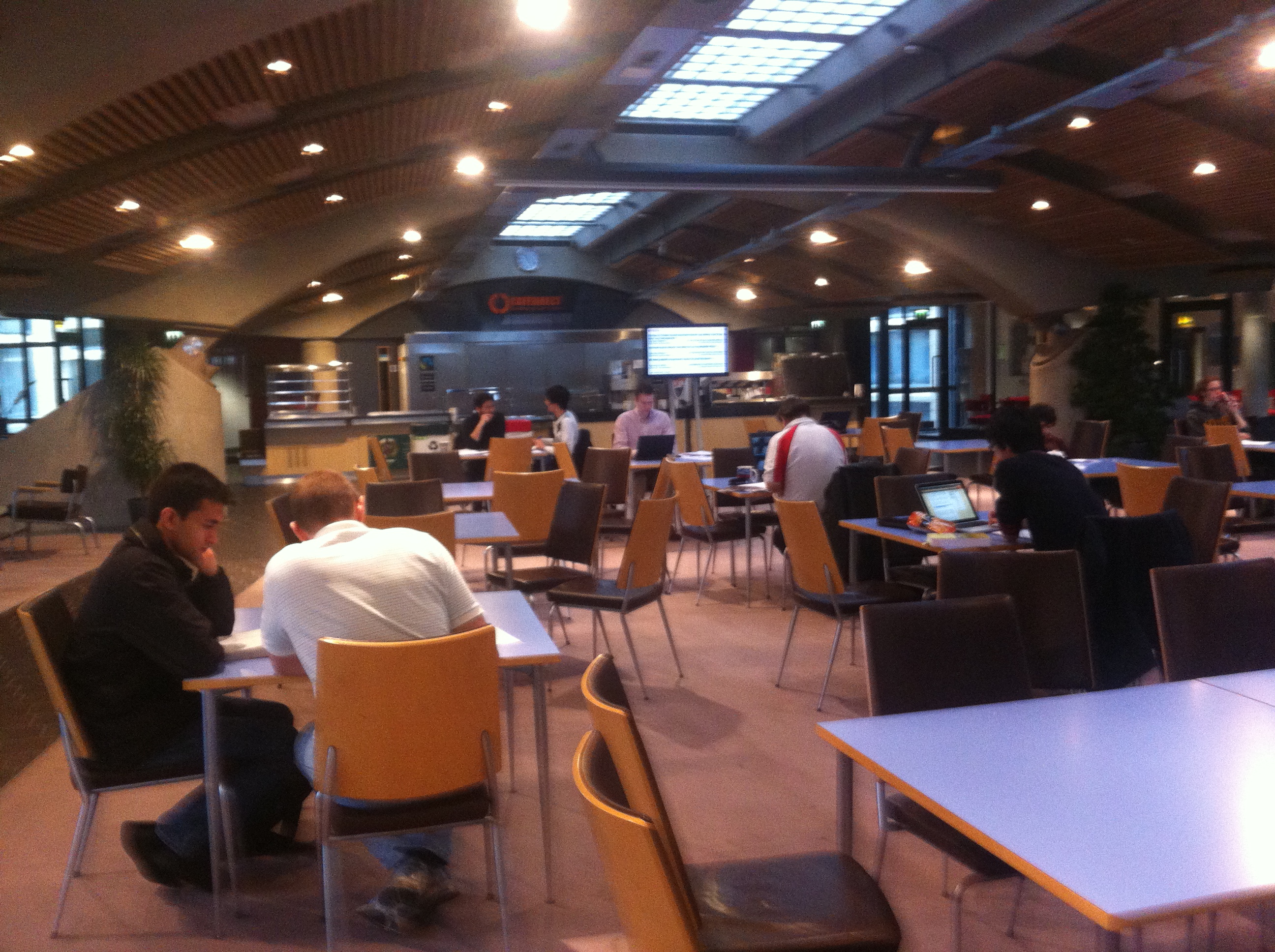
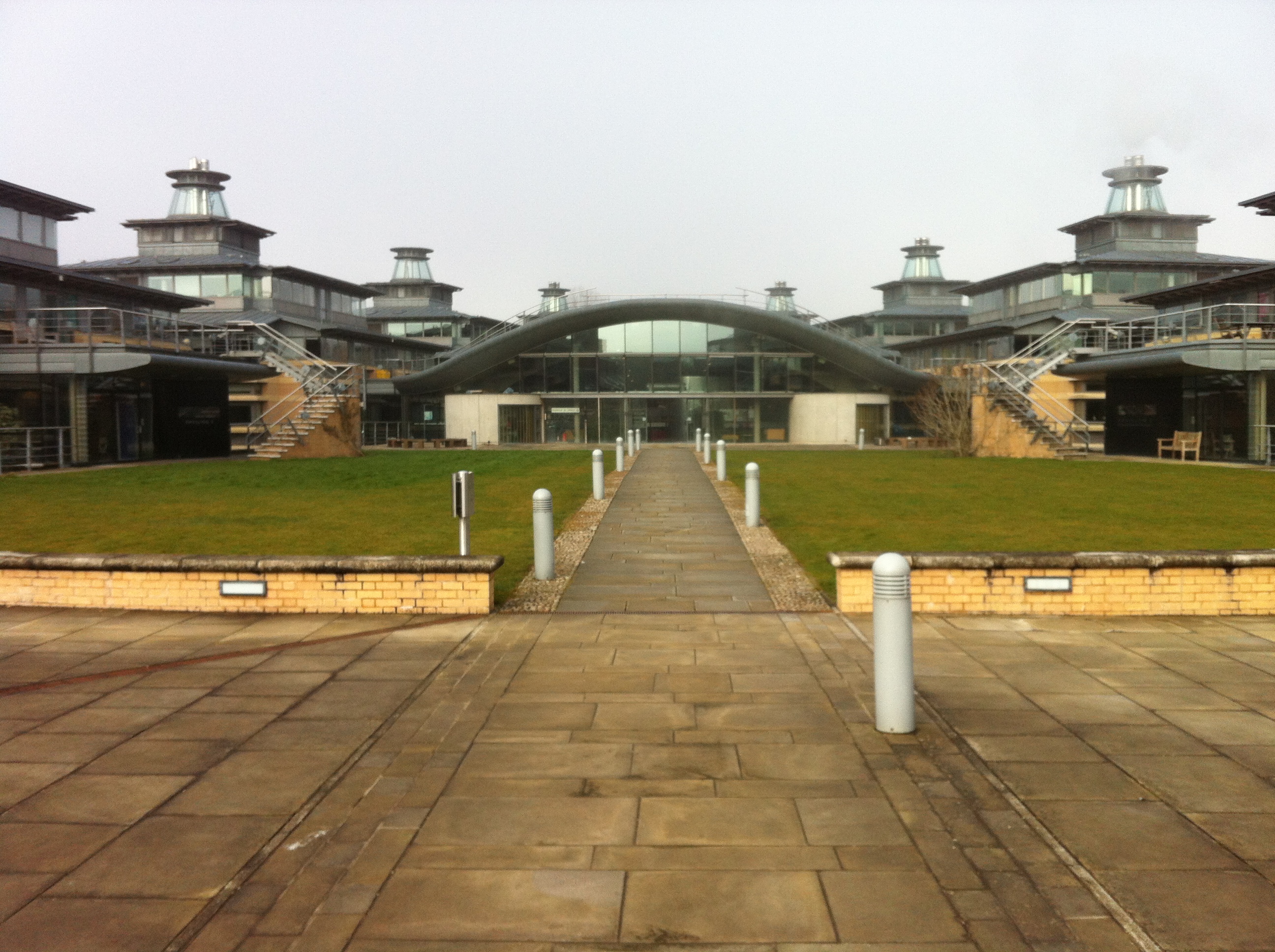
Speaking of coffee, one of the best aspects of the conference was the venue. Cambridge’s Department of Applied and Theoretical Physics forms part of its Centre for Mathematical Sciences and is housed in a lovely modern open-plan building, with the smell of coffee and scones wafting throughout the atrium. What other mathematics institute can boast such a setup?  Not DIAS, I’m afraid. Indeed, I’m writing this post in the quiet atrium/canteen (no annoying background music – that wouldn’t be tolerated here). However, I’ve just realised that we are now finished for the day, so I’m off to do some sight-seeing at last.

IMG_0479

The main atrium in the Center for Mathematical Sciences is one big coffee shop, perfect for group discussions of physics, philosophy and mathematics

IMG_0432

The Department of Applied Mathematics and Theoretical Physics forms part of the Centre for Mathematical Sciences at Cambridge

2 Comments

Filed under Cosmology (general), History and philosophy of science

Cosmic fingerprints at Trinity College Dublin

I was back in my alma mater Trinity College Dublin on Monday evening in order to catch a superb public lecture, ‘ Fingerprinting the Universe’ , by Andrew Liddle, Professor of Astrophysics at the University of Edinburgh. The talk was presented by Astronomy Ireland, Ireland’s largest astronomy club and there was a capacity audience (despite the threat of snow) in the famous Schrödinger lecture theatre in the Fitzgerald Building, Trinity’s physics department.

march2013

Professor Liddle was introduced by David Moore, Chairman of Astronomy Ireland, who also presented an update of the club’s recent activities  (David and I participated in a discussion of the life and science of Sir Isaac Newton on NEWSTALK radio station the evening before, you can hear a podcast of the show here). Anyone with an interest in cosmology will be familiar with Andrew Liddle’s seminal textbook ‘ An Introduction to Modern Cosmology’, (not to mention several other books) and the ensuing lecture certainly didn’t disappoint.

An-Introduction-to-Modern-Cosmology-Liddle-Andrew-9780470848340

Starting with a tribute to the work of both Schrödinger and Fitzgerald, Andrew gave a brief outline of today’s cosmology, showing how it has moved from a rather speculative subject to a mature field of study. He attributed this progress to key advances in three main areas: precision observations by satellite, sophisticated theoretical models and high performance computing for both analysis and simulation.

He then described five specific challenges that any successful model of the cosmos must address –  the expanding universe;  the formation of structure (galaxies etc);  the age of the universe; the composition of the universe (baryonic matter, radiation, neutrinos, dark matter and dark energy);  a consistent description of the very early universe (cosmic inflation or alternatives).

As ever, many in the audience were surprised to hear that, while dark energy is estimated to make up about 73% of the mass-energy content of the universe, we have very little idea of the nature of this phenomenon!

In the second part of the lecture, Andrew focused on the cosmic microwave background (CMB), explaining how the study of this ‘fossil radiation’  gives precious information on the early universe,  and in particular describing how tiny non-uniformities (or anisotropies) imprinted on the radiation formed the seeds of today’s galaxies (‘cosmic finger-printing’). There followed a swift description of results of CMB studies by the COBE and WMAP satellite missions, with a reminder that more recent measurements by the European Space Agency’s   PLANCK Satellite Observatory  will be announced next week. He also reminded us how, amongst other triumphs, the theory of inflation gives a very satisfactory explanation for the origin of the variations in the background radiation terms of quantum fluctuations in the very early universe. This link between inflation and galaxy formation is often under-stated in the popular literature; in answer to a query from me question time, Andrew confirmed that non-inflationary explanations for the origins of the observed variations in the microwave background have not been very successful. It’s pretty impressive that inflation can give an explanation for the origin of structure, given that this was not part of the original motivation for the theory.

ESA's Planck mission

The ESA’s PLANCK Satellite will report new measurements of the cosmic microwave background on March 21st this month

All in all, a fantastic talk, well worth the trip; afterwards, we all repaired to a nearby pub for sandwiches and further discussion of the universe over hot ports and Guinness…

P.S. In his discussion of the discovery of the expanding universe, I was pleased to see Professor Liddle refer to the work of Vesto Slipher; it seems that recent historical work on the important contribution of Slipher is finding its way into the mainstream community.

2 Comments

Filed under Cosmology (general), History and philosophy of science

Frontiers of Physics 2012 at Trinity College Dublin

I spent last weekend at the Frontiers of Physics conference at Trinity College Dublin. This is an annual meeting hosted by the Institute of Physics in Ireland; the aim is to establish links with secondary schools all over the country and to present the latest developments in physics and physics teaching. This year it was Trinity’s turn to host the conference and it was excellent, not least due to the superb organisation of IoP teaching coordinators Paul Nugent and David Keenahan.

Saturday morning featured some great lectures in the historic Schrödinger lecture theatre, located in the Fitzgerald building of Trinity’s School of Physics. Visiting this building always feels like coming home for me, as I did my PhD in one of the labs downstairs and gave tutorials in the Schrödinger theatre as a postgrad. The library on the second floor of the Fitzgerald building is becoming a notable science museum, with exhibits for many great scientists associated with Trinity such as Preston, Joly, Fitzgerald and Walton. (Schrödinger himself was a Professor at the Dublin Institute for Advanced Studies, not Trinity, but the theatre is named after the famous ‘What is Life? ‘ series of public lectures he gave there there).

The Schrödinger lecture theatre on the top floor of the Fitzgerald building

The Fitzgerald building, home to the physics department at TCD. The bubbles are a mockup of a sculpture that will honour the department’s Nobel laureate Ernest Walton

I won’t describe the lectures in detail, but three stood out for me:  ‘Tuning in the radio sun’, a description of solar astronomy at Birr Castle by Prof Peter Gallagher, head of the solar physics group at Trinity: ‘Tiny but mighty’ , a superb introductory lecture on nanotechnology by Prof Jonathan Coleman, head of the low-dimensional nanostructures group at Trinity: and ‘CERN, the LHC and the Higgs boson’  by Steve Myers, director of accelerators and technology at CERN.

Yes, that Steve Myers, the Belfast-born director of accelerators at CERN. Steve gives great talks on the nuts-and-bolts of the Large Hadron Collider and this was the main reason I was at the meeting. I’m scheduled to give yet another talk on the Higgs boson next month, so it’s important to catch lectures like this whenever I can. There’s nothing like hearing details of the experiment from the horse’s mouth and Steve certainly didn’t disappoint.

Steve Myers in action at the conference

On the teaching of physics, Dr Karen Bultitude of University College London gave an interesting lecture on ‘Gender Aware Teaching Practice’. As everyone in the discipline knows, a marked gender imbalance persists amongst students choosing physics; Karen’s main point was that all of the research done in this area indicates that making physics more ‘girly’ simply does not work, and she had some important tips for making physics more approachable for both genders. (Once more, it raises the question how a certain video at the European Comission ever saw the light of day, but let’s not go there).

After the lectures, we were treated to lunch in Trinity Dining Hall;  I think those who had not visited the college before were blown away by the Hall and by the walk across Front Square. Maybe I notice this sort of thing more after another trip to the US (see previous post), but the best was yet to come..

The Dining Hall at Trinity

Front Square at Trinity College

After lunch, we were treated to an exhibition of Walton memorabilia by  Dr Eric Finch. (Ernest Walton, a former Head of Physics at Trinity, won a Nobel prize for splitting the atomic nucleus with Cockroft in 1932). Eric had many fascinating things to show us, not least the famous letter where the brilliant young scientist describes his ‘red-letter day’ to his fiancee. Best of all, the exhibition is currently situated in Trinity’s Long Room, one of the most famous libraries in the world and a sight well worth seeing in it’s own right.

Dr Eric Finch at the Walton exhibit in the Long Room

The Long Room at TCD – it really is like this

Finally, we all trooped back to the physics department to see the Monck observatory. Since my time at the college, an observatory has been installed on the roof of the Fitzgerald building, consisting of an Atmospheric and Space Weather Monitor (outside radio antenna) and a Schmitt reflecting telescope (inside the dome, see below). Brian Espey, Professor of astrophysics at TCD,  described the operation of the telescope and we each had a peep. The observatory must be one of the most centrally located telescopes anywhere in the world- however, apparently the light pollution is not as bad as you might expect because the college is a quiet island in the centre of the city at night. I’m told the main problem is the use of floodlights for rugby practice!

The new dome on top of the Fitzgerald building

The Schmitt reflector inside the dome

The radio antenna for atmospheric measurements

All in all, a great meeting in a superb setting. The Frontiers conference takes place in a different venue each year, but it’s hard to compete with 400 years of history…

1 Comment

Filed under History and philosophy of science, Institute of Physics, Teaching

Hamilton Walk and Maths Week in Ireland

October 16th is a special day for mathematics and physics in Ireland. On this day, we commemorate the discovery of quaternions by William Rowan Hamilton, the great Irish mathematician and astronomer. Essentially, his insight was to postulate three distinct roots for the number -1, thus generalising complex numbers to four dimensions. It can be said that this discovery marks the birth of modern algebra, as quarternions opened the door to non-commutable algebra. Quaternions have found great application in modern technology, notably in compter algorithims for animation in films and computer games.

William Rowan Hamilton made a great many other contributions to mathematics and physics. For example, his formulation of a mathematical operator for the energy of a body – the Hamiltonian –  is a vital tool in quantum mechanics, the mathematical description of the quantum world. Open any modern textbook on quantum physics and you will encounter the word ‘Hamiltionian’ on almost every page.

As regards quaternions, we know exactly when Hamilton had his Eureka moment. According to his own writing, inspiration struck on the 16th october in 1843,  as he was walking with his wife from Dunsink Observatory in County Dublin (where he was Astronomer Royal) along the Royal Canal towards the city centre, in order to attend a meeting of the Royal Irish Academy, of which he was President.  He was so pleased with the breakthrough that he used his penknife to carve the new equation onto Broom bridge as they passed. The carving no longer exists but the bridge does, and the occasion is celebrated with a plaque. Every year, mathematicians and friends of mathematics congregate at Dunsink Observatory at 3pm and re-enact Hamilton’s famous walk along the canal to the bridge.


William Rowan Hamilton; the plaque displays the famous equation i2 = j2 = k2 = ijk = -1

This year, October 16th fell on a Sunday, so mathematicians and the general public arrived from far and near. The day started in Dunsink Observatory, with a brief description of Hamilton’s life and work by Fiacre O Cairbre, event organiser and lecturer in mathematics at NUI Maynooth. There followed a lovely walk along the canal in perfect weather conditions, all the way to Broom bridge to view the plaque. The outing finished with a short description of Hamilton’s breakthrough by another Maynooth mathematician, Anthony O’ Farrell, and a chorus of ‘Happy birthday, quaternions’ by all present. I think it’s great to remember our scientific heros like this;  it’s curious that even our very best scientists and mathematicians receive far less public attention that writers and musicians.


Dunsink Observatory and Broom Bridge on the Royal Canal

Each year, the Hamilton Walk is soon followed by a prestigious lecture on mathematics presented by the Royal Irish Academy and The Irish Times. Previous speakers have included Andrew Wiles, Steven Weinberg, Murray Gellman and Lisa Randall. This year, renowned string theorist Ed Witten will give a talk on quantum knots, see here.

The Hamilton walk  is one of the core activies of Maths Week Ireland, an initiative to raise awareness of maths in Ireland with events and lectures all around the country. Co-ordinated by CALMAST, a science outreach group at Waterford Institute of Technology, Maths Week has grown larger every year – you can find the program of events here. I will give a talk in Dublin on Wednesday evening, on relativity and the recent ‘faster than the speed of light’ experiment, see here .

6 Comments

Filed under History and philosophy of science, Science and society

Tyndall conference in Ireland

This weekend, I caught the last day of a climate conference honouring the memory of the great Irish scientist John Tyndall. Born in County Carlow, Tyndall became a key member of the Royal Society around the time of Charles Darwin. He studied under Robert Bunsen in Germany and did much to promote the idea of experimentation in science. Among his many contributions are the discovery of the Tyndall effect (an explanation for the colour of the sky in terms of the scattering of light) and pioneering works in optics.

Tyndall’s most important contribution was his experimental demonstration of the greenhouse effect. He was the first to show that certain gases – notably carbon dioxide and water vapour – absorb radiation of infra-red wavelength, thus trapping heat reflected from the earth. This discovery forms the bedrock of the modern climate science. Today’s phenomenon of global warming (measured as an increase in global temperature, glacier-melt and sea level rise over the last few decades) has been attributed to an increased concentration of greenhouse gases in the atmosphere caused by the burning of fossil fuels.


The 2011 Tyndall climate conference was sponsored by the EPA and the Royal Irish Academy

The conference celebrated the 150th anniversary of the publication of Tyndall’s landmark paper On the Absorption and Radiation of Heat by Gases and Vapours and took place in Dublin castle, a superb venue in the heart of Dublin’s vibrant city center (and the seat of British rule in Ireland only a century ago). Day one was an overview of Tyndall’s life and work, with a keynote lecture by eminent climatologist Richard Sommerville. The next two days featured slightly more technical talks on climate science. You can find the conference program and book of abstracts here.

I caught several excellent talks on Friday, including a talk on climate sensitivity and feedback mechanisms by John Mitchell of the UK Hadley Centre, and a talk on tipping points and their predictability by Peter Ditlevensen of the Center for Ice and Climate at the Niels Bohr Institute in Copenhagen. Another talk, by George Moore of the University of Toronto, suggested that we may already have passed such a tipping point. The lecture  ’20 years of IPCC projections’ by Ulrich Cubasch of the Free University of Berlin, demonstrated how well IPCC projections have stood the test of time. This is a point often overlooked in discussions of climate science in the media. The public are wary of theoretical models, and climate scientists sometimes forget to point out that we have had twenty years to test predictions – so far, the projections have turned out to be all too accurate.

Possibly the most advanced talk of the day was by Professor Ray Bates of the Meteorology and Climate Centre at University College Dublin, a former professor of meteorology at the Neils Bohr Institute. In his talk, Ray presented a new global climate model, contrasting it with the recent model of Dick Lindzen. The Lindzen model is quite controversial as it suggests that conventional climate models overestimate the contribution of an enhanced greenhouse effect on climate. In good scientific fashion, Ray outlined the basic physics underpinning the two models, steering clear of polemics and concentrating on the science. You can Ray’s paper on his, and other, models here .

All in all, a great conference, I was sorry to miss the first two days. One of the aspects the increased teaching workload in the Institute of Technology sector is that there is almost no time left over for conferences – someone’s idea of increased productivity.

Update

Richard Sommerville did a very nice interview on the Pat Kenny show, a flagship radio show on RTE radio 1. Pat raised almost every point favoured by climate skeptics, while Richard provided clear and cogent answers to each. Well worth a listen, you can download a podcast here.

1 Comment

Filed under Global warming, History and philosophy of science

The co-production of knowledge

In his last lecture on the history and sociology of science for sophomores at Harvard, Alex Wellerstein brought the class up to date with the latest thinking in Science and Technology Studies (STS) with an overview of the idea of co-production.

The idiom of co-production aims to get away from both the deterministic view of science as divorced from social context, and from social determinism. Instead, scientific knowledge is seen to be produced in an integral process that involves both the scientific method and the social context. Hence, the idea of co-production engages with questions that are both metaphysical and epistemological – how the world is, and how we find out about it – but blurs the boundaries between the two. This is slightly different to previous theories such as the sociology of scientific knowlege (SSK) of the Edinburgh group; a key difference is that co-production does not claim that social context ‘trumps’ the scientific method, but sees both as integral to scientific knowledge.

The figure most associated with the idiom of the co-production of knowledge is Sheila Jasanoff, the brilliant Professor of Science, Technology and Society at Harvard (my current boss!). Sheila has long been a leading light in the field of STS, and her articulation of the idea of co-production is considered one of her main contributions to the field.

In her seminal book, “States of knowledge: the co-production of science and social order”, a collection of essays by diverse authors on the subject, Sheila gives an overview of the idiom of co-production in the first chapter and a summary in the last. She describes the objectives of co-production in terms of four components

description: a view of science in society and society in science
explanation: how co-production mitigates against linear and mono-causual stores about scientific progress
normativity : the analysis of emerging orders
prediction : prediction, prescription and action

There is a great deal to the concept of co-production, including concepts such as causality loops, positive feedback and co-evolution. I won’t attempt to summarize them here but you can find a very good review of the main themes in the last chapter of the book above.

Reception

The articulation of co-production in its current form is relatively recent, and I am not aware of major reactions against it from philosophers or scientifists. One obvious benefit is clarity; a common criticism (and misunderstanding) of the social constructivists is the idea that scientific knowledge is entirely socially constructed. This is not really what most constructivists argue, and I think the idiom of co-production clarifies this a lot.
Also, it is rather hard to argue against co-production- how can one argue that scientific knowledge (or any other sort) is not co-produced to some extent? I think this is the cleverest part of the concept, and I suspect it will help convince scientists of the importance of social context, and go some way towards mending fences between the scientists and the sociologists of science.

That said, it seems to me that while co-production helps to  clarify how knowledge is created, it doesn’t say much about another part of the scientific process, i.e. how good scientific theories survive the passage of time (this the context of discovery vs the context of justification we’ve met before). You might argue that the subsequent testing is also co-produced, and so it is; but where a given scientific theory is produced in one place and one context, it is subsequently tested over time all over the world in different contexts by people specialize in proving each other wrong! Hence, many scientists argue that social context arguments ultimately fade away.

A good example of this is the famous argument by historian Paul Forman concerning the indeterminacy of quantum physics. Scientists in Germany were heavily criticized after WWI for predicting that science would win the war; according to Forman, the indeterminacy of quantum physics may be attributed – at least to some degree – to an attempt to appease the population (we are happy to admit the limits of science etc). However, most physicists strongly disagree with Forman’s hypothesis for three reasons

  • the postulate of wave properties for the electron was first made by de Broglie (a Frenchman), and the first observation of electron diffraction was by Davisson and Germer (Americans). The latter forces you to quantum duality and thus to indeterminacy – whether you like it or not
  • many other non-German scientists (Niels Bohr, Paul Dirac etc) played a major role in the development of the theory
  • the theory survived over time worldwide because, although crazy, it matched experiment

2 Comments

Filed under History and philosophy of science