Skiing in America

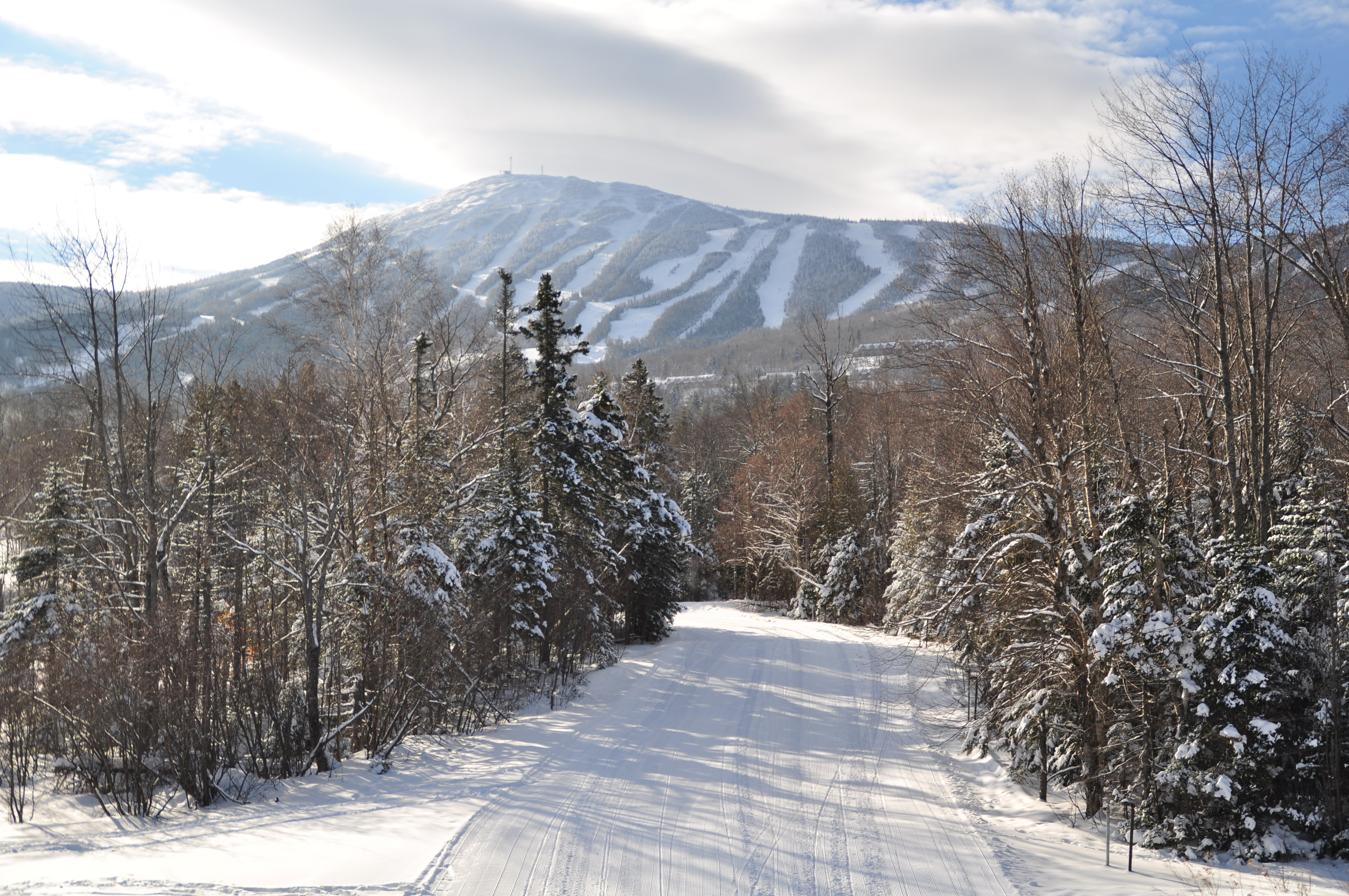
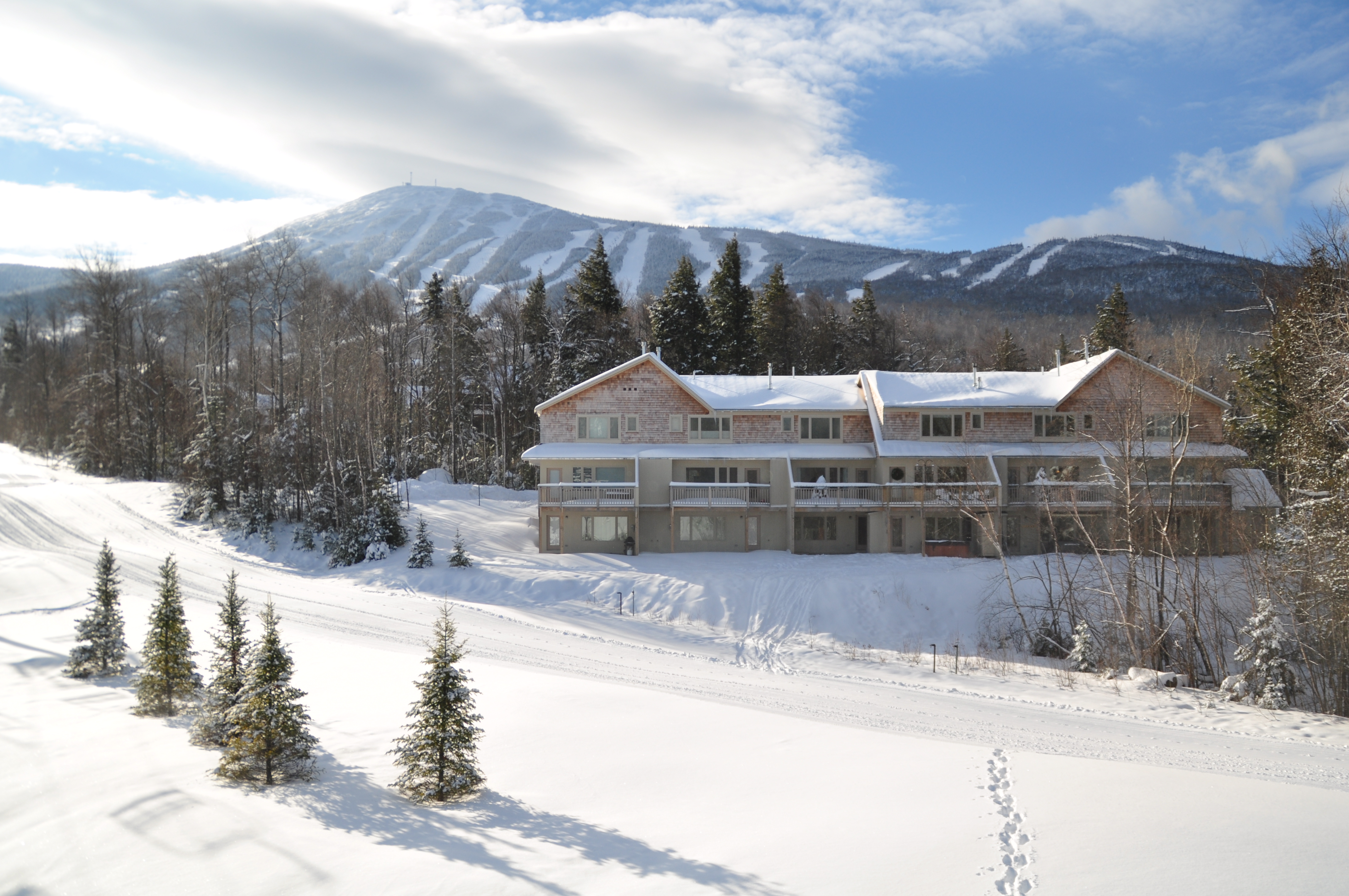
This week I had my first ski holiday in North America, at the Sugarloaf Mountain resort in Maine. I was there with the Harvard Graduate School of Arts & Sciences and it was a fabulous trip, comparing favorably with many resorts in Switzerland and Austria.

We drove 5 hours north from Boston and it was certainly worth it. The resort was superb; beautiful American backcountry with stunning scenery, plenty of challenging slopes and almost no-one in the lift queues (admittedly this was early in the week). The accommodation was fab, lovely snug little condos about a ten minute walk from the resort centre. Most importantly, we were blessed with good conditions; plenty of recent snow, decent visibility, even some sun and clear skies on the last day.

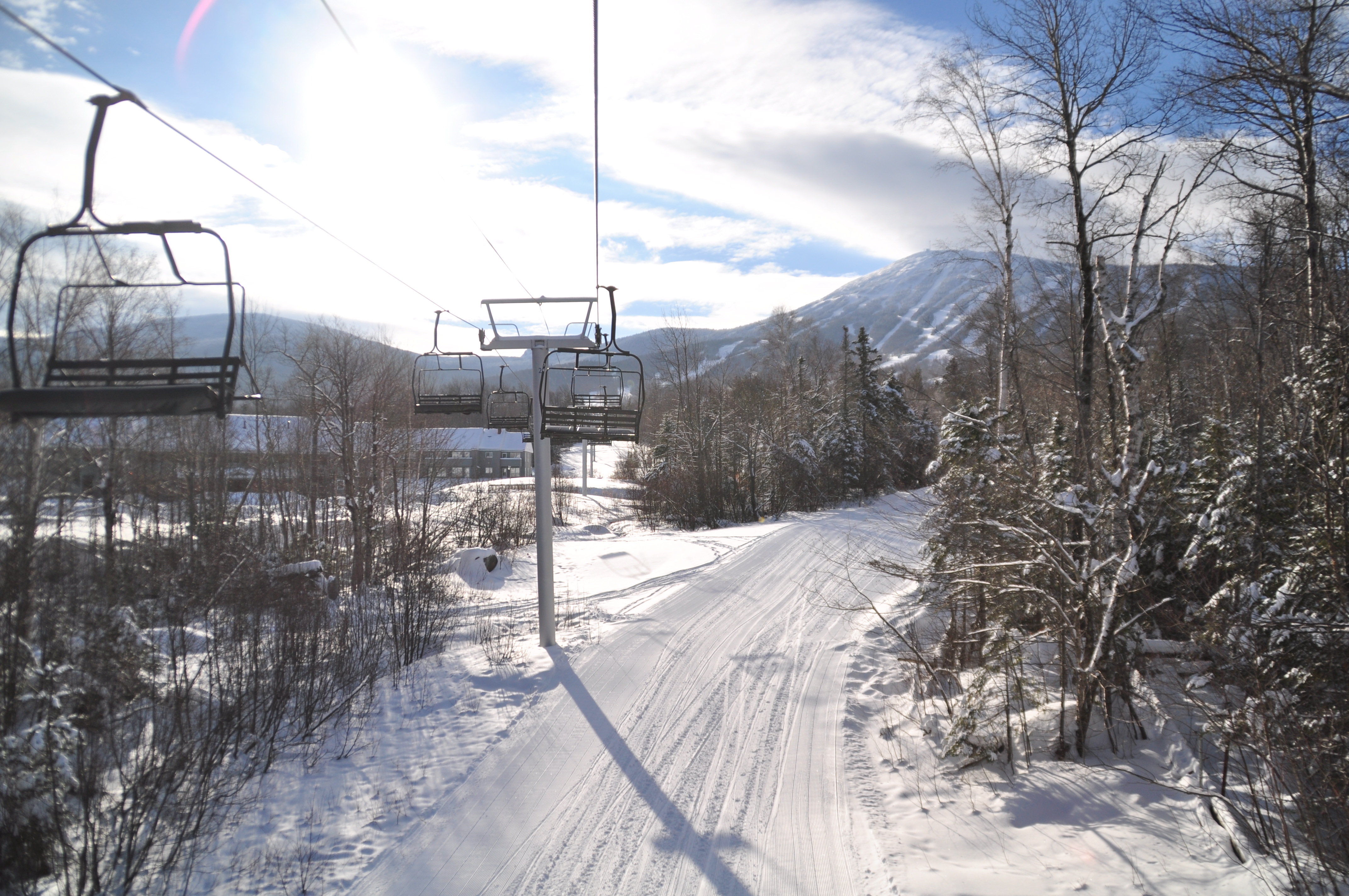
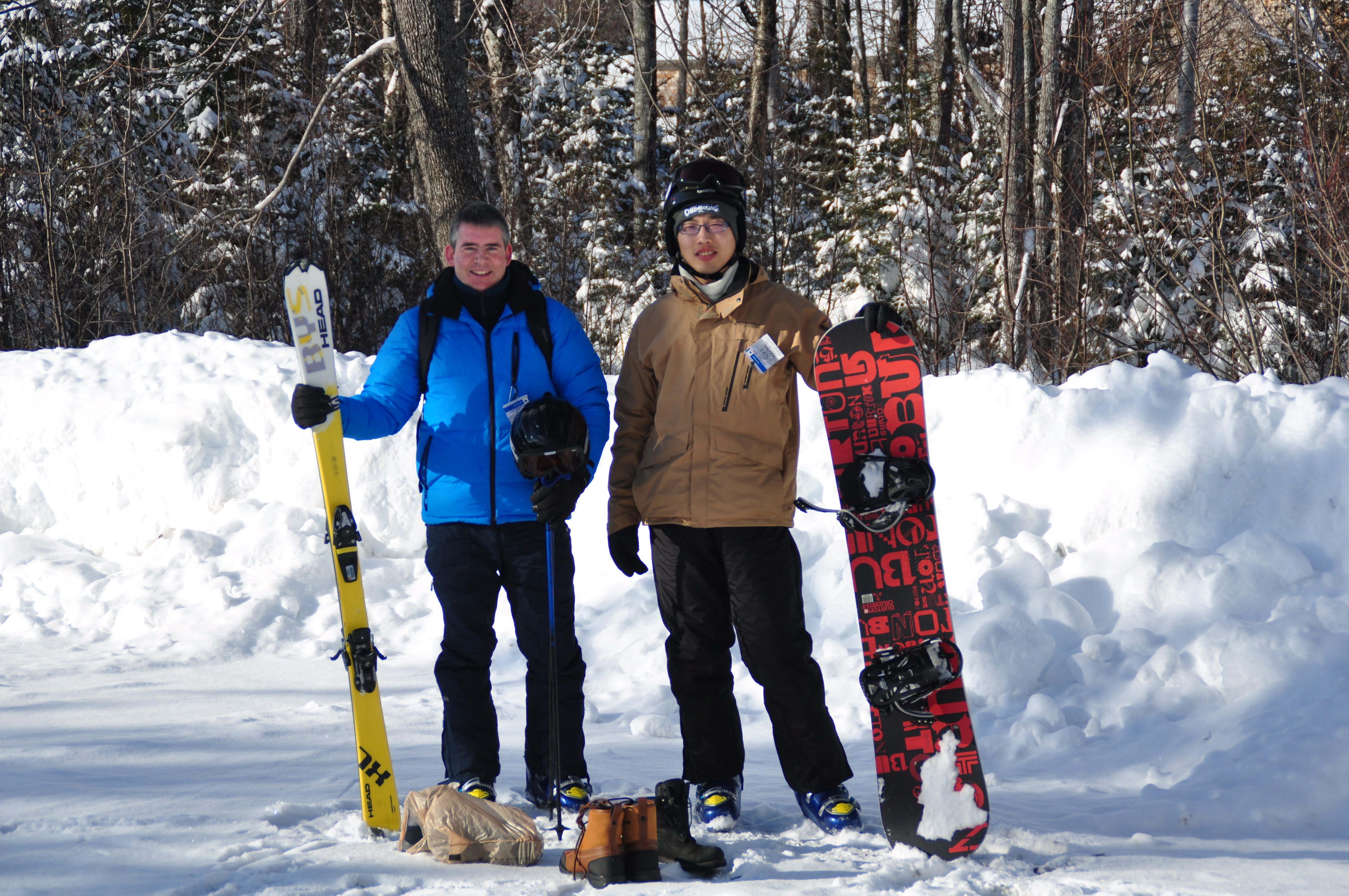
That said, there were some major differences with Europe. First, the lifts; the old uncovered 3- and 4-seaters you never see in Europe now (except France). I hate these lifts: they are deadly slow because there is only one drum, and you freeze if it’s windy or snowing because there is absolutely no cover. A second difference was the ski hire; standard good quality HEAD carving skis, but no twintips or soft skis to be had at any price (I like twintips for moguls and rough terrain). Presumably the hire market is different in the US; while everyone hires in Europe (because of the flights), most American skiers will bring their own gear by car. Finally, there was the cost; we got a great deal through the Harvard club, but I noticed the standard price for ski hire and lift pass was high, comparable with the big-name Swiss resorts.

Old-style skilifts

HEAD carving skis


Photos courtesy of Hertz Zi He

All in all I was sorry to leave. Term starts up at Harvard on Monday, but hopefully I’ll get some more skiing on the East coast in the spring.

Update

What did I say about those lifts? I just heard that the resort had a major problem with one of their lifts just two weeks ago. One of the lift cables derailed, injuring six skiers and leaving dozens others stranded for several hours. You can read news reports of it here.

Comments Off on Skiing in America

Filed under Skiing

2010 blog reviews

WordPress send an annual review of blog readership to bloggers every New Year’s day; below are the stats for ANTIMATTER. I notice that the readership figures are quite high (for a science blog). This is probably because my posts are reprinted on international science websites such as Interactions.orgParticle Physics Planet and Irish websites such as Ninth-level Ireland – thanks for that everyone.  Perhaps another reason is that bloggers tend to list other blogs of interest alphabetically, so ANTIMATTER sits at the top of the blogroll in quite a few science blogs. (I notice from the stats that I get most traffic from NOT EVEN WRONG, RESONAANCES and CENTAURI DREAMS, thanks guys). I also notice that ANTIMATTER attracts a lot more viewers than commentators; this seems to be a feature of technical blogs. That said, it’s interesting that last year’s most popular post was one on skiing!

*********************************************************************

The stats helper monkeys at WordPress.com mulled over how the blog ANTIMATTER did in 2010, and here is a summary of its overall blog health:

Healthy blog!

The Blog-Health-o-Meter™ reads Wow.

Crunchy numbers

Featured image

Madison Square Garden can seat 20,000 people for a concert. This blog was viewed about 66,000 times in 2010. If it were a concert at Madison Square Garden, it would have performed about 3 times.

In 2010, there were 33 new posts, growing the total archive of this blog to 169 posts. There were 69 pictures uploaded, taking up a total of 15mb. That’s about 1 pictures per week.

The busiest day of the year was November 18th with 664 views. The most popular post that day was Skiing in Tignes.

Where did they come from?

The top referring sites in 2010 were math.columbia.edu, resonaances.blogspot.com, interactions.org, centauri-dreams.org, and facebook.com.

Some visitors came searching, mostly for antimatter, einstein, doolin, anti matter, and fridge.

Attractions in 2010

These are the posts and pages that got the most views in 2010.

1

Skiing in Tignes December 2009
2 comments

2

Lecture Notes April 2008
5 comments

3

Science week in Ireland: was Einstein wrong? November 2009
11 comments

4

Genius of Britain; Dawkins vs Hawking June 2010
7 comments

5

Introductory physics: circuits March 2010
4 comments

******************************************************************************

Postscript

ANTIMATTER picked up two awards this year – a Top Science Blog award from Science. Org and a Top 5 Blog award (in the cosmology category) from American Science Technicians.
.

2 Comments

Filed under Uncategorized

Stuck at the airport: that in-between time again

I’m still hoping to get back to Ireland for Christmas Day, but it’s now midday on Christmas Eve and I haven’t made it any further than Boston airport. The problem is, as everybody knows, many European airports like Dublin and Heathrow are experiencing large snowfalls and feezing conditions this week, and simply can’t keep the runways clear; planes can’t get in or out which causing travel chaos.

‘What? Snow in winter?’, you cry sarcastically. Yes, but heavy snow in December is relatively uncommon in countries like Ireland and the UK. Worse, it comes at a time of huge passenger volumes. Many airports simply can’t cope with the double whammy, with knockon effects for all air travel. Delays at Heathrow, in particular, have caused chaos at airports around Europe and elsewhere.

Dublin airport in the snow

As for me, I’m happy enough. I like these in-between times, where one is neither working nor on holiday. A good time to think. Also, Logan airport is very nice, sensibly divided into small terminals (unlike Dublin airport). Of course, travel delays are relatively easy if you don’t have tired kids, financial worries, or have to sleep on the airport floor. Here in Boston, Aer Lingus passengers are being put up in the nearby Hilton while we wait for the next available flight; pretty decent, considering the airline can hardly be held responsible for the weather.

I’m using the time to read through Piers Bizony’s ATOM, the only interesting book I could find in the tiny airport bookstore. The book is based on the excellent BBC TV series of the same name and it’s a very entertaining read, if a little surprising. From the title, I had expected a brief history of particle physics for the layman; from the discovery of the nucleus to the quark etc. Instead, the book concentrates mainly on the story of the evolution of quantum physics. Which is no harm. But it does remind me that there are remarkably few books out there that tell the story of the discovery of the atom and subatomic particles as a simple phenomenological tale . Hmm…

Something to think about. Right now, it’d be nice to get home sometime soon.

Update

We’re finally about to get on a plane to Dublin (arriving 3 am Christmas Day!) and I still haven’t finished Bizony’s book.  I’ve enjoyed my airport sojourn but others are less sanguine. Some passengers are utterly fed up and are less than polite to the airline staff.  It’s amazing how some need someone to blame in situations like this, even when it’s perfectly obvious that it’s weather, not the airline, that is the problem. Human nature I guess…

2 Comments

Filed under Particle physics, Travel, Uncategorized

Escape from Cambridge

I like to get out of Cambridge at the weekends if I can. The place is amazing during the week, with a non-stop round of interesting seminars at Harvard Kennedy School and physics department, not to mention the seminars at the MIT physics and engineering departments one T-stop away – but it’s nice to cross the river to see Boston city proper at the weekends.

On Saturday nights, I play in a trad session in the Littlest Bar on Broad St in the heart of the financial district. It’s  a great session with good music and friendly players but it’s strange to get off the T from flat Cambridge and be surrounded by tall skyscrapers, gives me vertigo every time. Fun to visit at weekends but I couldn’t live downtown.

The financial district in downtown Boston

Rockin’ session at the Littlest Bar: photo Sara Piazza

On Sunday, I often take a trip to the Beacon Hill area of Boston, exploring the coffee shops along historic Charles St and walking along the beautiful park by the Charles river. Today, I ventured a bit further for a Christmas do with some relatives in the Backbay area of Boston. It’s a beautiful part of the city with lovely old houses, parks and not too far from Boston Common. Although the T makes it easy to reach anywhere within Boston city, I try to make a point of walking around the city and today I decided to see if I could walk home from Backbay. Right around the corner was historic Boston Symphomy Hall and from there it was a short walk along Mass Avenue, across Harvard bridge and back to MIT and finally back to Cambridge centre – all within 40 minutes.

Boston Symphony Hall, home of BSO

It’s extraordinary how small and eclectic this city is.

2 Comments

Filed under Travel

How it ends

This month’s issue of Physics World features a review of mine, of the book How It Ends by astronomer Chris Impey. I’m always chuffed to be published in Physics World; as the flagship publication of the Institute of Physics it is a very good science magazine indeed, with well-informed commentary and articles of very high level by prominent researchers. PW also take their book reviews seriously; I notice both the front cover and editorial of this issue draw attention to the reviews.


As for the book: I enjoyed How It Ends greatly, it’s a fabulous read for any scientist or anyone with even a marginal interest in science. In a nutshell, Impey, a noted astronomer and astrobiologist, considers the ultimate fate of all things, from the future of the planet and all living things to the fate of the sun, the galaxies and the entire universe. As you can imagine, the book traverses a great many disciplines, from biology, biochemistry and ecology to geophysics, astrophysics and cosmology. However, it is written in a very lighthearted and accessible style that is extremely readable. PW magazine is members-only but you can read my review here….or better still go and buy the book.

Actually, the skill with which Impey handles his interdisciplinary tale is no coinicidence as he is associated with a well-known research group at Arizona State University  that specializes in astrobiology, a discipline that combines the very different disciplines of astrophysics and biology in order to investigate the conditions necessary for biological life to form. In fact, members of the Arizona group had some input into the major success in astrobiology we all just heard about- the discovery of lifeforms that can thrive on arsenic (as opposed to phosphorous), an important advance that broadens the scope for the possibility of life existing elsewhere.

So go and buy the book.

2 Comments

Filed under Astronomy, Science and society

Antimatter trapped at CERN

The Daily Telegraph has a story today with the headline

Antimatter captured by CERN scientists in dramatic physics breakthrough

accompanied by the picture below and the usual razzmatrazz of antimatter-powered spaceships, antimatter bombs, Angels and Demons etc.

I first came across this strange story on Facebook early this morning and the Daily Telegraph headline iis equally puzzling. As every schoolgirl knows, antimatter is an exotic form of matter made up of particles of opposite electric charge to that of everyday matter (see post on this here). What is puzzling about the story is that physicists have been producing antiparticles in high-energy accelerator experiments since the 1950s and have been able to manufacture whole atoms of antimatter for over a decade now. (Atoms of anti-hydrogen are manufactured in accelerators by allowing anti-protons to capture anti-electons, see here).

About a third of the way down the article in the Telegraph, one discovers the real nature of the breakthrough –  the ALPHA experiment at CERN have reported that they have managed to produce atoms of anti-hydrogen that are relatively longlived (see paper in Nature here). Up to now anti-atoms were extremely shortlived because antimatter is instantly annihilated when it encounters matter (e.g. the container walls). What the Alpha group has done is to trap anti-hydrogen atoms in complex magnetic fields for up to a tenth of a second. Hence the word ‘capture‘ in media headlines, I guess.  It is certainly an important breakthrough as it should enable a detailed study of subtle differences between atoms of hydrogen and anti-hydrogen. (For example, in what way does the spectrum of anti-hydrogen differ from that of ordinary hydrogen?)

The Alpha experiment – don’t try this at home

This is an important area of study because any differences in the spectrum of anti-hydrogen vs ordinary hydrogen could shed light on one of the greatest mysteries of particle physics and cosmology; why is our universe made of matter? What subtle imbalance occurred in the early universe that led to the survival of ordinary matter over antimatter? From the point of view of particle physics, it wll be very interesting to see if CPT symmetry is conserved in the case of anti-hydrogen: if not this has implications for the standard model of particle physics.

Almost everybody in the particle physics universe is blogging on this breakthrough today so I won’t comment further – there is an excellent summary of the experiment on the Symmetry Breaking blog

Update

Kate McAlpine (author of the great LHC rap) has an excellent article on the above in this week’s edition of New Scientist . It’s well worth a look, especially her explanation of how neutral anti-atoms can be trapped in a magnetic field.

Update II

When the film Angels and Demons came out, Dan Brown was widely criticized for suggesting that enough antimatter could be trapped long enough to form a stable bomb (see post and review of A&D here). Looks like Brown wasn’t quite so far off the mark after all – at least about entrapment, if not about a feasible amount of antimatter for a bomb. My guess is that he had some serious discussions with the CERN group, just as he claimed at the time..

Not quite so daft

6 Comments

Filed under CERN, Cosmology (general), Particle physics

Wednesdays, WIMPs and super-WIMPs

Wednesday is my favourite day this year. The weekly STS seminar is over and discussed, the fellows group meeting is done and it’s too early to start next week’s readings. At 12.15, I give a solid-state physics class over the web to my hapless students in Ireland and then I’m finally free to catch up on what’s going on in the world…

One of the things going on this week is a terrific cover story in Scientific American on dark matter by particle cosmologists Jonathan Feng and Mark Trodden. As every schoolgirl knows, particle cosmology is one of the most exciting areas of physics today; the convergence of the study of the extremely small (particle physics) and the study of the extremely large (cosmology) has had some spectacular successes in recent years. For example, the theory of cosmic inflation arose from considerations of particle physics, see post on inflation here.

The article gives a great overview of the concept of dark matter, from a postulate in particle physics (Fermi’s beta decay – bit of a stretch here), to the postulate of dark matter in galaxy formation in the 1930s (Fritz Zwicki). Of course, the W and Z particles of ‘ordinary matter’ are now associated with the former, but it is thought that dark matter may play a role in their masses. Similarily, Zwicki’s proposal has now been extended to explain galaxy formation all scales, from galaxy clusters to halos. (Essentially, dark matter is thought to provide the inert scaffolding on which ordinary matter clustered to form galaxies during the expansion of the universe). The article goes on to describe the standard candidate for dark matter; hypothetical particles that feel only the gravitational and weak nuclear force (i.e. do not interact with the electromagnetic force, hence ‘dark’) they are known as known as weakly interacting massive particles or WIMPs. The authors do a great job of carefully describing the WIMP coincidence; the fact that the density of WIMPs postulated by particle physicists closely matches that postulated by cosmologists for the scaffolding necessary for the galaxy formation. The article also gives a useful overview of current searches for WIMPs in particle physics experiments.

What is unusual about the piece is that the authors then go on to explain the newer concept of super-WIMPs; the idea that the original WIMPs may have decayed into particles that do not feel even the weak nuclear force. Thus is a fascinating idea and leaves open the possibility that such particles may interact with ‘dark forces’ we are completely unaware of.

It’s a great overview, well worth reading – and unlike many such articles, it also includes a clear description of the famous bullet cluster i.e. the first tangible cosmological evidence for dark matter.

Galaxy collision:  x-rays (pink) are emitted when the interstellar gas clouds collide, while the dark matter (blue) remains aligned with distant stars because it is unreactive .

Update

The first comment below makes me realise that I should have  mentioned the counter-argument. Some physics groups suggest that dark matter does not exist – instead our current understanding of gravity is incomplete. This is a perfectly respectable area of research, known as MOND; however,  sophisticated experimental tests of our law of gravity (GR) have come out strongly in favour of the current theory..so far. Meanwhile, there have been tantalizing hints of particles that could be candidates for dark matter in at least two of the particle experiments mentioned in the article.

I should also mention that dark matter is a favourite target of science skeptics. However, it is often overlooked that the central thesis of the postulate is about not making an assumption i.e.  just because the ordinary matter that we are familiar with can be seen, we should not assume  that all matter can be seen..and science is very much a game of making as few assumptions as possible

8 Comments

Filed under Cosmology (general), Science and society

A typical day at Harvard

What’s a typical day at Harvard like? A good few people have asked me this. Truth is, I have no idea; but my own working day here is pretty busy.

I usually start the day online in my apartment; Boston  is five hours behind Ireland (actually four this week because European clocks went back last weekend), so it makes sense to deal with email/college issues at home immediately after breakfast. This little job has an annoying habit of taking up a lot more time than it should (what is it with email nowadays?) and this morning was no exception.

Turns out a book review I recently sent off to Physics World Magazine missed the agreed deadline because of problems with my email server. Marvellous. That took a while to sort out, as did the usual list of college administrative tasks. In particular I’m currently trying to organise a physics class I will give to WIT students from Harvard by videolink – an interesting technological challenge but of course I forgot about the hour change when booking a conference room!

Then it’s a 10 minute walk along beautiful leafy Harvard St to the Kennedy School, for the weekly seminar of our Science and Technology Studies circle. These talks are an important part of the STS activity at Harvard and there is always plenty of serious discussion afterwards. Today, Allison MacFarlane of George Mason University gave a talk on nuclear power; ‘A Free for All? Impacts of Emerging Nuclear Countries’ was a talk on the thorny issue of the acquisition of nuclear energy by countries not currently in the nuclear club. The talk focused on the reasons why such countries desire nuclear power (energy economics, energy security, prestige etc) and the issues perceived by current members of the club (reactor safety, waste disposal, weapons proliferation). One big surprise was the number of countries declaring an interest; the speaker concentrated on the case of Jordan, Indonesia, Turkey, Iran and the UAE  but there were many many more….I had no idea.

After the talk,  it was straight into our weekly Science, Power, and Politics reading group for STS fellows. This continued our review of science, citizenship and democracy.  For this discussion we had studied papers such as ‘A Question of Europe‘ by S. Jasanoff (in Designs on Nature:  Science and Democracy in Europe and the United States ) and ‘Science and the Political Imagination in Contemporary Democracies‘ by Y. Ezrahi, (in States of Knowledge, Jasanoff, ed.); the  two-hour discussion focused on science and democracy, in particular science policy and citizenship in the context of the  European Union. If you think physics is difficult, you should try this stuff..

A run across the quad

After this session, I had to run – literally – from the Kennedy School up to the Harvard Physics Department on the main campus for a talk on astrophysics.  How did the first stars and black holes form? was an excellent talk by Avi Loeb on the formation of the earliest stars and galaxies. The lecturer presented a masterly overview of current theoretical work in computer modelling of  galaxy and black hole formation,  the fit between theory and experiment for the case of the spectrum of cosmic hydrogen, and the importance of data from the next generation of large telescopes.  If you want to more on this subject, go and buy his book.

I particularly admired the way the speaker carefully described the assumptions underlining the simulations i.e. the basic assumptions of the Lambda CDM model used ( see here for the basics of this model). Theoreticians often have to make assumptions for their models, which is perfectly ok as as long as one doesn’t lose sight of the assumptions being made!  One oddity: in his opening remarks, Loeb made a few cracks about the speculative nature of string theory; I was quite surprised, given Harvard’s strong reputation in this area. Indeed, noted string theorist Lisa Randall was in the audience, among others, but no-one seemed to take offence – perhaps they are all concerned that too many young theorists are heading in this direction.

It is 6 pm by the time I get back to the office and the day’s work just starting. Tomorrow morning, we have our Science and Technology Studies fellow’s meeting, where STS fellows take turns to present their work to each other for discussion in closed session.  In the afternoon, there is  a talk on dark matter in MIT by Paul Schechter I’m really looking forward to. How does anybody get any work done in this place?

P.S. On second thoughts I’m too tired for serious work. I”ll go and fool around on the web in Lamont – my favourite library whose restaurant is open 24 hours !

2 Comments

Filed under Science and society, Travel

Harvard and Boston: first impressions

So here I am at last, taking a sabbatical from WIT to spend a year as a visiting fellow at Harvard University.  I’m not at the physics department (surprise) but at the Science, Technology and Society Program of the Kennedy School of Government, studying issues of science policy. Quite a move sideways and it’s early days so more on that later…

Harvard University is as lovely as you’d expect, beautiful redbrick buildings and quads. The main campus is almost entirely undergraduate teaching and accommodation with the famous postgraduate schools ringed around it a few blocks away. They don’t have the system of separate colleges of Oxford and Cambridge, so the campus looks more like dear old Trinity College Dublin than Oxbridge.

Harvard Gate

As far the city of Boston, I’ve got familiar with it quite quickly. I had to because the ‘campus accommodation’ I booked in adavnce turned out to be totally inappropriate in almost every way (in a different part of the city for a start). So I got to see plenty of Boston as I spent the first two weeks trudging around looking for alternate accommodation. I arrived in the middle of a heatwave and that didn’t help either. About half the city seemed to be in the same boat; the streets have been full of overheated students dragging their beds and sofas from one place to another (Americans don’t seem to believe in furnished apartments, is it something to do with the pioneer mentality?)

All of this didn’t stop me noticing that Boston is a beautiful, vibrant city, very European in many ways. Fascinating culture, diverse neighbourhoods, endless parks along the river and then of course there’s leafy Cambridge. Recently, I’ve been staying in Brookline village, a beautiful throwback to smalltown 1950s America. It’s quite a commute to work though, so this evening I’m packing my bags one last time and moving to a posh penthouse in a typical New England house in Cambridge, midway between Harvard Square and MIT (available for an unspeakable amount of money, but that’s the norm here).

Brookline village

A typical New England house in leafy Cambridge

Another big surprise is the public transport ; you can reach almost any part of the city with the superbly networked tram, subway and bus system, all integrated with one travel card – far better than the equivalent in any Irish city. It reminds me more of Germany than of Ireland. In fact, as a general first impression, Boston reminds me more of Berlin than Dublin (this is a reference to the famous ‘Boston or Berlin’ discussions so beloved of Irish politicans). It’s not just the transport, but people’s attitude and organisation. There’s something very Germanic about the way everybody is incredibily polite but firm and firmly organised. Whether you’re applying for a ID card, a phoneline or a lease, the rules are the rules; almost everything is automated, computed and done according to the book with no exceptions. Another similarity to Germany is the attitude to all things Irish – I’ve never known such a positive reaction to an Irish accent!

That said, there are some obvious differences to Europe. One is that smoking is dead here. You just can’t, even outside most cafes and pubs. Astonishing how a whole population can change their mind on an issue like this. (If finally convinced, will Americans one day take the same attitude to CO2 emissions?). Less pleasant is the issue of health insurance; my health insurance here (compulsory) is over ten times what I pay for european cover. So I can see why Obama is trying to change things. (But why an Irish health minister wants to imitate the current American health system is anyone’s guess).

Similarily, undergraduate college fees are crazily expensive. A different order of magnitude from the european system.  I know at least one CEO who works a second job at weekends in order to send his child to a good college. It’s hard to see how this doesn’t lead to a two-tier system…

All in all, my first impressions of Boston are very positive and I’m looking forward to spending time here. Best of all, the heatwave is over and ‘fall’ is approaching …to be followed by a snowy winter, can’t wait

10 Comments

Filed under Science and society

Climate change: the tv briefing

There was a chat program on the Irish channel TV3 last week that perfectly illustrated the difficulty of discussing complex scientific issues in a public forum (see last week’s post).  It consisted of a tv panel debate on climate change, where two respected scientists and a member of Friends of the Earth debated climate issues with two members of a new Irish political lobby group. It quickly became clear that neither the Chair nor the lobbyists knew (or accepted) anything of the basic facts of climate science. Faced with a blank rebuttal of basic physics, the scientists had an uphill struggle tryng to communicate the issue of climate change.

I thought this a fairly typical example of the problems of such media discussions. The lobbyists were clear, passionate and articulate, stating their views as if they were established facts, uncluttered by equivocation. (The first sentence uttered was “the earth is not warming” and there were many other such statements). The scientists, by comparison, sounded rather uncertain and unclear. As so often, completely uninformed opinion, unweakened by any sort of balanced view, sounded much more convincing.

It’s very hard to know what to do when one encounters such resistance to basic science. I suppose all we can do is keep repeating the basics, as clearly as we can, and hope the public and politicians can discern the difference between established facts and random opinion. As an exercise, I decided to write down the main points I myself would hope to make during the course of such a debate. This is what I would like to have said:

**********************************************

1. GLOBAL WARMING

There are now multiple lines of evidence that show clearly that, over the last 50 years, the average surface temperature of the earth and its oceans has been steadily increasing. This rise (about 0.75 °C) may seem small compared with the normal background variation in day-to-day and seasonal temperatures. However, a gradual increase in average represents a significant physical effect; for example, the difference in the average global temperature of the last ice-age and the present is only a few degrees Celcius.

2. PART OF A NATURAL CYCLE?
Those who study past climate cycles have considered this question in great detail and their conclusion is that the temperature rise cannot be attributed to a natural cycle, for a number of reasons. The most obvious is the rate of change; the rise in average temperature we are seeing over the last few decades corresponds to a rise  seen over thousands of years in past climate cycles. Obvious external causes, such as solar cycles or changes in solar activity, have been specifically ruled out (we are currently in a cooling part of the dominant solar cycle). Most tellingly, it has been discovered that while the lower atmosphere is steadily heating up, the top of the atmosphere (the stratosphere) is cooling down – an observation that strongly suggests a cause closer to home.

3. THE ENHANCED GREENHOUSE EFFECT
Physicists have long known that the temperature of the earth is regulated by certain gases in the atmosphere. These gases trap heat radiated from the warm earth’s surface, stopping the globe from radiating all of its heat to space (the greenhouse effect). The ‘greenhouse gases’ only account for a tiny percentage of the atmosphere but they play a vital role in regulating the planet’s temperature.  Hence global climate is highly sensitive to the concentration of greenhouse gases in the atmosphere and one can expect any change to this concentration to have a significant effect on climate. (The Irish scientist John Tyndall established that the most important greenhouse gases are water vapour, carbon dioxide and methane, while major gases such as oxygen and nitrogen do not block the earth’s heat).

We now know that, since the advent of the industrial revolution, mankind has been increasing the concentration of atmospheric greenhouse gases. In particular, the burning of fossil fuels such as oil, coal and gas all release extra CO2 into the atmosphere. Direct measurements of the CO2 content of the atmosphere have been made since the 1950s and there is no doubt that there has been a steady rise since measurements began; in general, it is estimated that the current concentration of CO2 in the atmosphere is over 35% higher than that of pre-industrial times. At first, it was thought that this extra CO2 would be absorbed by the oceans. Some of it is, and this causes its own problems. However, it is now known that much of the extra CO2 remains in the atmosphere.

Putting two and two together, scientists believe that the global warming we have observed in recent decades is almost certainly caused by man-made greenhouse gases released into the atmosphere, a phenomenon known as the enhanced greenhouse effect.There are now muliple lines of evidence for this hypothesis (not least direct satellite measurements of the heat radiated from earth into space that show an increasing dip in the region of the spectrum where CO2 absorbs).

4. THE FUTURE PROGNOSIS
Studies of past cycles suggest that as time goes on, the warming will accelerate because of feedback loops. For example, the melting of large areas of ice at the poles will significantly reduce the ability of the globe to reflect heat, causing additional warming. The oceans will lose their ability to absorb CO2 as they acidify, also causing further warming. Studies of past cycles also suggest that the rising temperature will itself lead directly to an increase in greenhouse gases such as CO2 and water vapour in the atmosphere, and eventually to the release of methane from deep sea vents and the permafrost.

For human populations, the main consequences of a warming earth will be increasing desertification and drought in the hotter regions, and an increase in sea level around the globe (the latter is because water expands when heated and because of glacier melt). The former could render large parts of Africa and Australia uninhabitable, while the latter could cause widespread and permanent flooding in low-lying countries such as Holland and Bangladesh (pop 55 and 25 million respectively).

5. THE SOLUTION?
We can certainly reduce the enhanced greenhouse effect by replacing the use of fossil fuels with renewable energy technologies such as wind, wave and solar energy that do not cause carbon emissions. Since there is a time lag associated with the effect, we need to do this as soon as possible. However, this is economically difficult as the Western standard of living is built on the cost-effectiveness of fossil fuels. Most importantly, action to curb fossil fuel use will only be effective if it is global and it is hard to persuade developing countries to curb fossil-fuel use essential for their development. So far, attempts to reach international agreement on binding targets for carbon emissions have failed. Yet is estimated that China alone has coal deposits that if fully used, could tip us into irreversible climate change within one century.

****************************************************

All of the above is basic, well-established science that is accepted by almost the entire scientific community. However, much debate on the topic occurs in the media. This is simply a facet of a modern media that does not distinguish between informed and random opinion (not to mention vested interest). Uniquely among scientific theories, the theory of man-made global warming also faces great political resistance from conservatives who oppose regulation in almost any form. Lobbying by conservative interests can be heavily influential, in politics and in the media , particularly in the USA. The result is a continuing confusion and lack of public engagement with the issue, a state of affairs that is making it very difficult for world governments to put in place any sort of co-ordinated mitigating action.
7 Comments

Filed under Global warming