Category Archives: Uncategorized

Euclid and the Renaissance

Prof. Paddy Barry of University College Cork gave the weekly WIT maths/physics seminar today, entitled ‘School Geometry in Modern Times’. During the seminar, Prof Barry touched on that familiar theme, the loss and eventual recovery of Greek maths and science.

It was interesting to hear this story from the perspective of maths rather than science. Euclid’s Elements date from about 300BC, and the productive period of Greek geometry lasted until about 400 AD. Following the collapse of the Roman empire, Europe lapsed into the Dark Ages, throughout which learning and scholarship were minimal. Thanks to the conservation of classical scholarship by Islamic scholars, a gradual recovery began in Europe about 1000 AD, culminating in the Renaissance in the 15th and 16th centuries (all this is of course true for Greek science as well as maths).

The strange aspect of the story is that the painstaking recovery of classical maths and science made it appear sacred. In fact, we now know much of Aristotlean science was wrong (due to lack of experimentation), but it was only against the greatest resistance that reformists such as Copernicus, Kepler and Galileo gradually made headway. For example, it is a well-known fact that many of Galileo’s main opponents were in the universities, not in the Church. Still, the scientific method won out in the end…

And what of Greek maths? Euclidean geometry was at first embraced throughout Europe. Around the 1500s, reformists such as Petrus Ramus got to work in France, and the French approach to geometry was followed in most continental European countries. However, England was more conservative. Thanks to Oxford and Cambridge, Euclid’s Elements remained the dominant treatment until 1903. There followed then an adaptation of the Elements, exemplified in A School Geometry by Hall and Stevens. ..

So, given the different treament of Greek maths and science, it could be said that in England at least, there was a decisive split between maths and science right from the time of Galileo! I can’t help wondering if this split might why English science played quite a small role in the early 20th century revolutions in theoretical physics – there’s no question that quantum theory (QT) and general relativity (GR) were dominated by German-speaking countries in the early years. I guess it’s a coincidence as GR invoves curvilinear geometry, and QT involves none at all..

4 Comments

Filed under Uncategorized

The last lecture

I read somewhere that a new trend in American colleges is for academics to be asked to give ‘the last lecture’, i.e. the lecture they would give if this was to be their last.

It’s a very interesting idea – I suspect a lot of academics might give talks on subjects that they are truly interested in, not necessarily than their own area of specialization! In my case, I find myself giving quite a few public talks on cosmology recently, mainly because there is such public interest in the topic, and we are seeing such exciting results the last few years.

You can see clips from a recent cosmology talkof mine here, though I’m told you can’t really see the overheads. Next week, I’m giving a public talk on cosmology and religion ( ‘The Big Bang and the Mind of God’) – the things I get into…

Getting back to the last lecture, there is also a very nice book on the topic here – in this case, the academic (Randy Pausch) was diagnosed with a terminal disease, but decided to go ahead with the lecture anyway. A lovely book, and you can see recordings of the lecture itself on u-tube here

3 Comments

Filed under Uncategorized

Ireland and CERN

There is an article in yesterday’s Irish Times on the Large Hadron Collider (LHC), the massive new particle accelerator at CERN, the European Organisation for Nuclear Research.

Long the jewel in the crown of European science, CERN will truly become the undisputed world leader in the field of sub-atomic physics when the LHC, the world’s most powerful particle accelerator is switched on. The experiments at the new accelerator will be watched with intense interest by scientists the world over, for information on the fundamental structure of matter, and on the evolution of our early universe

Unfortunately, journalist Derek Scally repeats the concern that the experiments might create a giant black hole that will swallow the earth, a concern that is completely unfounded.

More sensibly, Mr Scally points out that the participation of Irish scientists in the historic LHC experiments will be severely limited by the fact that Ireland, almost uniquely among 20 major European nations, is not a member of CERN. For decades now, Ireland has baulked at joining this most successful of European scientific collaborations. The omission has decimated Irish research in elementary particle physics, a field of fundamental importance in science, and sits awkwardly with our efforts to become a world leader in science and technology. It has also cost us financially, with Irish engineers and scientists unable to bid for large international contracts in high-tech software and hardware projects.
All this from a country whose only Nobel Prize in science was for splitting the atom!

7 Comments

Filed under Uncategorized

More on inflation

Reading back over this morning’s post, I see I should have emphasised that cosmic inflation is not an alternative to the Big bang theory; it is simply a modification of the conventional big bang model.

What is the physical cause of the initial exponential expansion of the universe? Guth proposed that the expansion was propelled by a repulsive gravitational force generated by an exotic form of matter. Although this proposal was slightly flawed, the flaw was soon overcome by the invention of “new inflation” by Andrei Linde in the Soviet Union and independently by Andreas Albrecht and Paul Steinhardt in the US. (New inflation posits that the early universe went through the stage of exponentially rapid expansion in a kind of unstable vacuum state – a state with large energy density, but without elementary particles).

Nowadays, the evidence for the inflationary universe model is very strong. One of the coolest aspects of the theory inflation is an explanation for the large scale structure of the universe (galaxies etc.) Basically, the idea is that quantum fluctuations in the early universe could have been stretched by inflation to astronomical proportions, providing the seeds for galaxy formation. The predicted spectrum of these fluctuations was calculated by Guth and others in 1982.

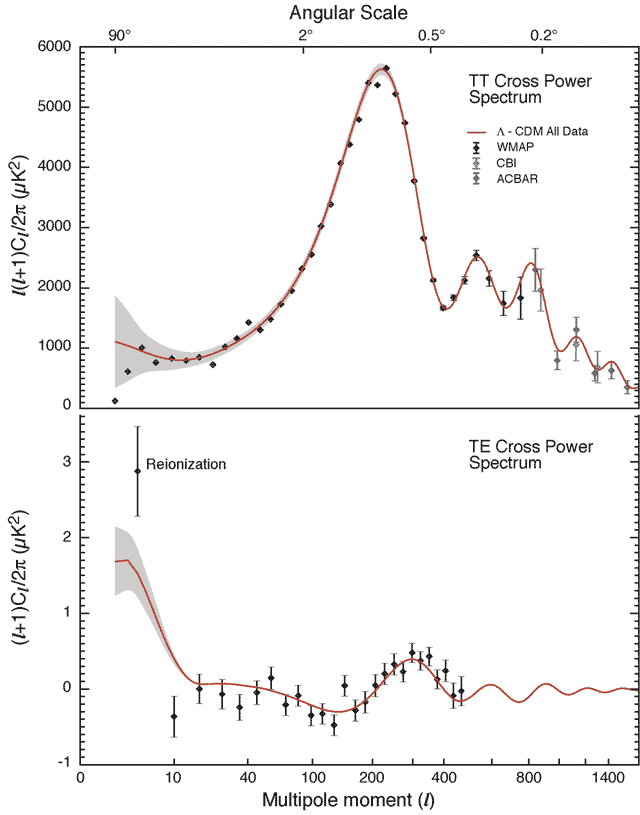
These fluctuations can be seen today as ripples in the cosmic background radiation, although the amplitude of these faint ripples is only about one part in 100,000. The ripples were detected by the COBE satellite in 1992, and they have now been measured to much higher precision by the WMAP satellite and other experiments. The properties of the radiation are found to be in excellent agreement with the predictions of the simplest models of inflation [image].

2 Comments

Filed under Uncategorized

Cosmic inflation

So back to the Horizon Problem: how can it be that regions of the universe that are further away than light could have travelled during the finite age of the universe, have the same temperature and other physical properties?

The modern answer to this question is the theory of inflation. Basically, inflation suggests that the initial expansion of the universe did not look at all like the Hubble graph (previous post): instead the very early universe underwent an unimaginably large hyper-expansion right at the beginning. (Doesn’t this violate relativity, since nothing can travel faster than the speed of light? No, because relativity sets no constraints on space-time itself).

Inflation offers a simple solution to the Horizon problem – if the universe expanded arbitrarily fast, even the farthest flung points could once have been in thermal contact. Actually, inflation also offers a neat solution to the flatness problem: the maths shows that an inflationary universe would be driven towards flatness naturally (not unlike a balloon of unimaginable large suface area).

Of course, the above is a simplified overview of the theory of inflation – the main point is that if inflation is right, the universe was driven towards the critical value of flatness/ critical mass density that exists today (far from lucky coincidence). It’s also impressive that the theory was not posited to address the particular problems above, but rose in a completely different area of physics, namely Alan Guth’s attempt to address problems in Grand Unified Theory, a branch of particle physics

3 Comments

Filed under Uncategorized

The Big Bang model

It ocurred to me this morning that it probably doesn’t make sense to discuss solutions to the Horizon Problem without first giving a sketch of the Big Bang model. Here’s the sketch:

The Big Bang model posits that the universe began as a superhot, superdense singularity, and has been expanding and cooling ever since. Although we don’t know a whole lot about the initial singularity , there is very strong evidence for the rest of the model.

1. The expansion of the universe: it’s been known since 1929 that far-away galaxies are receding away from each other at a speed proportional to their distance (Hubble’s Law). This is surprisingly easy to measure as the light emitted by moving galaxies is red-shifted by the Doppler effect. Following the famous Hubble graph back down to the origin led Georges Lemaitre to the idea of a Universe bursting out from a tiny volume (the primeval atom) . Nowadays, we say the Universe began as a superhot, superdense explosion of space, time , matter and radiation, expanding and cooling as time goes on

2. The composition of the elements: if the universe began as some sort of tiny fireball, it would have been too hot for atoms to form at first. Calculations show that a universe made up of about 75% Hydrogen and 25 % Helium should then have evolved. Guess what – the figures match our universe (all the other elements are formed in dying stars)

3. The cosmic backround radiation: the physicist George Gamow first pointed out that radiation left over from the very early universe might still be observable. (The reason is once atoms began to form, the scattering of light becomes reduced and the universe becomes transparent). Such radiation would be hugely redshifted and freezing cold, but it should be there. Just such radiation was found by Penzias and Wilson, on building the world’s first radiotelescope (although they didn’t know what it was). Since the background radiation offers a real glimpse of the very early universe, most of modern cosmology is concerned with getting more and more accurate measurements of this ‘cosmic fossil’, using fancy satellite telescopes such as COBE and WMAP.

And that’s the model..

Comments Off on The Big Bang model

Filed under Uncategorized

Deep Brain Stimulation

Wow. Our weekly maths/physics seminar at WIT is often interesting, but today was something else again. Professor Anraoi de Paor of University College Dublin gave an astonishing talk entitled ‘ Deep Brain Stimulation for the Relief of Symtoms of Parkinson’s Disease’.

The talk concerned recent work by the French neurosurgeon Alim Benabid, who has pioneered a surgical technique that alleviates syptoms of Parkinson’s disease (tremors and gait abnormailites) using external electrical stimulation of the brain. Benabid’s technique has been amazingly successful. However, little is known as to why it works, although a physiological explanation based on a feedback suppression model was put forward in 2005 by Haeri et al.

The Haeri model is based on the theory of ‘dither injection’ along with concepts of nonlinearity. It turns out Professor de Paor had studied contol circuit models exactly like this in the 1970s, and he was able to apply his analysis to the Haeri model. As a result de Paor can give a straightforward explanation for the effect in terms of control theory. (Technically, he suggests that the application of a particular type of non-linear stimulus inhibits the destructive feedback loops in circuits).

Between the three groups, this is amazing science. De Paor showed some videos of the effect of the external stimulation on Parkinson patients, absolutely stunning. Now, with a straightforward underlying explanation of how it works, it seems an even more promising technique. Best of all, it is expected that Benabid’s technique may be be also effective in the treatment of other conditions such as epilepsy, obsessive compulsive disorders, etc as described here.

Wish my own research had this sort of application!

1 Comment

Filed under Uncategorized

The Horizon Problem

One of the great things about my job is Wednesdays. I don’t have any lectures, just a clear day apart from our weekly maths/physics seminar in the afternoons. I often take a walk into my village on Wednesday mornings, and use the opportunity to think about Important Things over breakfast. This morning I was thinking about a lecture I gave yesterday to our students on the Horizon Problem.

The Horizon Problem is a problem with the Big Bang model of the evolution of the universe. It concerns the observation that the furthest flung regions of the universe are further apart than light could have travelled in the age of the universe; yet these regions have the same temperature and identical other physical properties (from measurements of the cosmic background radiation). This is an amazing coincidence, given that the regions could never have been in contact or communicated with one another.

The Horizon Problem is a bit like another conumdrum in Big Bang theory: the Flatness Problem. According to the modern theory of gravity (Einstein’s general theory of relativity), the space-time curvature of our universe could be closed, open, or exactly balanced between the two (flat). Recent evidence from the cosmic microwave background suggests that our universe is exactly flat – worse, mathematics predicts that should it deviate even slightly from flatness, it would quickly become a runaway closed or open universe. Since gravity depends on mass, what this really means is that the density of matter in the universe is at the exact critcal value required for flatness. Why such a precise balancing act? Another amazing coincidence.

Is this God at work or is there a rational explanation? Proposed solutions tomorrow

1 Comment

Filed under Uncategorized

Climate change and the case for nuclear power

Super talk last week in our college on the subject of climate change and the case for nuclear power in Ireland.

The seminar was given by Prof Peter Mitchell, who has led the radiation physics group at UCD for thirty years. Peter, an old professor of mine, started with a superb overview of the climate change threat, with plenty of nice graphs from the IPCC.

He then proceeded to argue the nuclear case, emphasisng the operating principle of the new pebble-bed reactors. It was an interesting talk, especially when he got in to the details of cost-benefit analysis.

I don’t think Peter is pro-nuke – it’s more he’s concerned at the way the Irish rule it out, without comparing costs. Certainly, his analysis of the future yield from wind energy was worrying.

Of course, there is always the thorny issue of nuclear waste – would you trust an Irish government to safeguard this carefully?

At question time, I asked Peter about the European situation (he is an expert member of EURATOM) – will future decisions be taken at EU level rather than at national level in future years? He said that idea had been around for a long while, but was a political hot potato. More on this next week….

Comments Off on Climate change and the case for nuclear power

Filed under Uncategorized

Do anti-depressants work?

It’s a strange thing for a physicist to host a panel discussion on medial science in an auditorium full of doctors. Last Thursday I chaired the second of the monthly science public debates at the new Science Gallery at Trinity College Dublin.

The topic for debate was ‘Do Anti-Depressants Work?”. On the panel was Professor Irving Kirsch, author of that recent controversial study that suggested that anti-depresssants do little better than placebos in all but the most severe cases – you can see the study in full here.

We kicked off the session with psychologist Kirsch giving a brief overview of his meta-analysis. (Our format for the debates is to allow each panellist to make a 5-minute pitch, then to throw open the floor to questions). He was then suceeded by well-known consultant psychiatrist, Dr Veronica O’ Keane, who flatly disagreed with much of his analysis. One disagreement concerned “all but the most severe cases” – what Kirsch deemed severe depression O’Keane deemed more like average (a not unprecedented point of disagreement beteen psychiatrist and psychologist). Dr O’ Keane also pointed out the lack of longterm data. Most of all, she was deeply unhappy with media reporting of the Kirsch study, saying she felt it could lead to severe patients discarding vital medicine.

Another member of the panel, Dr Harold Barry, spoke of his day-to-day experience as a GP, emphasising the importance of a multi-modal approach, and spoke of his despair of the perception of family doctors giving out anti-depressants at the drop of a hat. I liked the sound of his approach, but I got the feeling he was talking mainly about people you and I might meet walking around, a good remove from O’ Keane’s patients.

Question time was lively, as you can imagine. A lot of the questions touched on the placebo effect – it seems that, in a way, the real result of the Kirsch analysis is how effective placebos can be….(for you scientists out there, a placebo is basically a dummy pill). However, one problem is that longterm comparative studies with placebos can’t be done (for obvious ethical reasons). Another point was increased incidence of suicide with the use of SSRIs in some cases. For a while, I thought it was going to degenerate into a battle between psychologists and psychiatrists. However, a common thread that kept coming through was the importance of a multi-modal approach. Certainly, the audience seemed equally hostile to drugs-only or therapy-only approaches. Apparently, there is great emphasis on cognitive behavioural thrapy in Britain at the moment. If you want to know more, you can see a recording of the debate at www.sciencegallery.ie.

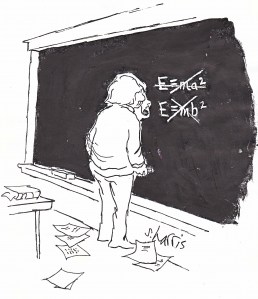
All in all, a very interesting evening. I certainly learnt a lot! After the debate, panel and audience retired to the gallery restaurant, where the discussion continued. Unfortunately, I was enjoying this so much, I forgot about my damn car, which Trinity car park locked in for the night with relish. Thanks. So I had to crash on a friend’s sofa in Dublin, and hare back to Waterford at the crack of dawn next morning for class. Well done Einstein.

1 Comment

Filed under Uncategorized